 Edge of the World Riyadh Tours
Best Time to Visit the Edge of the World: Month-by-Month Guide
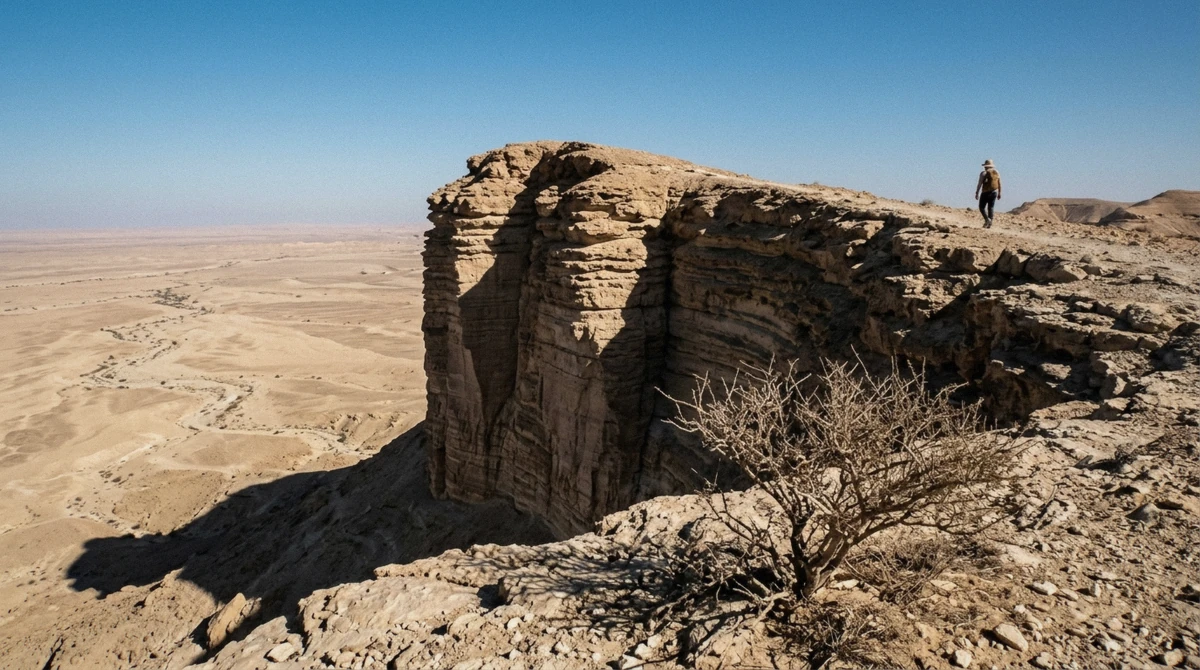
The best time to visit the Edge of the World is October to March, when daytime on the escarpment near Riyadh sits around 18 to 25 degrees Celsius (64 to 77 Fahrenheit) and the walking between viewpoints is comfortable rather than dangerous. The best time to visit the Edge of the World is October to March, when daytime temperatures at the cliff sit at a comfortable 18 to 25°C (64 to 77°F) and nights cool to around 8°C (46°F). April and September are the workable runner-ups, each trading something for the shoulder-season timing. The window to avoid, if walking along an unfenced rim with no shade sounds unpleasant in real heat, is June through August, when the plateau passes 40°C (104°F) most afternoons. The hour you go matters almost as much as the month, and that's covered below too.
Quick answer
October to March is the best time to visit the Edge of the World near Riyadh: daytime highs at the cliff run 18 to 25°C (64 to 77°F), nights drop to around 8°C (46°F), and the walk between viewpoints stays comfortable rather than punishing. April and September work as shoulder-season compromises. June through August is the window to avoid, when afternoon highs regularly pass 40°C (104°F) with no shade anywhere on the site.
Key takeaways
- Best window: October to March, 18 to 25°C (64 to 77°F) by day
- Runner-up: April or September, warmer but still walkable, thinner crowds than midwinter
- Avoid: June to August, when highs push past 40°C (104°F) with zero shade on the rim
- Nights swing hard even in the comfortable season: 8°C (46°F) in December after a 20°C (68°F) afternoon
- Sunset beats sunrise here for a reason tied to which way the escarpment faces
- Book sunset tours to the Edge of the World two to three days ahead in the cool-season weekend crush
Seasons at a Glance
Read the Verdict column first; the two tables underneath back it up with the actual numbers.
Month by Month
| Month | Conditions | Weather | Crowds | Verdict |
|---|---|---|---|---|
| January | Cold nights, clear days | 20°C day / 8°C night | High (cool-season peak) | Best overall |
| February | Cool, comfortable | 23°C day / 10°C night | High | Best overall |
| March | Warming, still comfortable | 27°C day / 14°C night | High | Excellent, book ahead |
| April | Hot afternoons, mild evenings | 33°C day / 19°C night | Moderate | Good at sunset, hot at midday |
| May | Genuinely hot | 39°C day / 24°C night | Low | Avoid the walk after 10am |
| June | Peak heat begins | 42°C day / 27°C night | Low | Avoid |
| July | Hottest month | 44°C day / 29°C night | Low | Avoid |
| August | Still extreme | 43°C day / 28°C night | Low | Avoid |
| September | Slowly cooling | 40°C day / 25°C night | Low to moderate | Marginal, sunset only |
| October | Comfortable returns | 34°C day / 20°C night | Moderate, rising | Good |
| November | Cool and clear | 27°C day / 14°C night | High | Best overall |
| December | Cold nights, mild days | 21°C day / 10°C night | High | Best overall |
What the Table Doesn't Say
Four months share the verdict Best overall, and that's not padding: November through March genuinely are close enough in comfort that picking between them comes down to your travel dates rather than the weather. The real line is between the whole October-to-March run and the June-to-August stretch, where the difference stops being a preference and becomes a safety question on an unfenced, shadeless site.
Temperatures Month by Month
These are typical long-term averages for the Riyadh plateau, not a forecast for any single day; check conditions close to your dates regardless of the month.
Day High and Night Low
| Month | Day high | Night low |
|---|---|---|
| January | 20°C (68°F) | 8°C (46°F) |
| February | 23°C (73°F) | 10°C (50°F) |
| March | 27°C (81°F) | 14°C (57°F) |
| April | 33°C (91°F) | 19°C (66°F) |
| May | 39°C (102°F) | 24°C (75°F) |
| June | 42°C (108°F) | 27°C (81°F) |
| July | 44°C (111°F) | 29°C (84°F) |
| August | 43°C (109°F) | 28°C (82°F) |
| September | 40°C (104°F) | 25°C (77°F) |
| October | 34°C (93°F) | 20°C (68°F) |
| November | 27°C (81°F) | 14°C (57°F) |
| December | 21°C (70°F) | 10°C (50°F) |
Reading the Numbers
July is the hottest month by a clear margin at 44°C (111°F) by day, and January is the coldest at 20°C (68°F) by day and 8°C (46°F) overnight. The swing between day and night is the detail visitors underestimate most: even in a comfortable January, a 20°C (68°F) afternoon on the rim drops to 8°C (46°F) once the sun is down, which matters on every sunset trip that stays out for stargazing. Figures are typical seasonal averages for the Riyadh plateau; check the current forecast close to your travel dates rather than relying on the monthly average alone.
Best Season by Traveller Type
If You want the classic photograph everyone else has
November to February, at sunset, when the light and the clear air both cooperate
If You're travelling with young children
December or January, when the walk stays comfortable and the evening chill is the only extreme to plan for
If You hate crowds more than you mind warmer air
April or late September, when demand thins but the walk is still tolerable at sunset
If You're on a tight budget and flexible on dates
The shoulder months either side of summer, when tour transport fills more slowly than the cool-season weekend rush
If You only have a June, July or August trip available
Go strictly at sunset, never midday, and treat the visit as short by design
Sunrise, Sunset or Midday
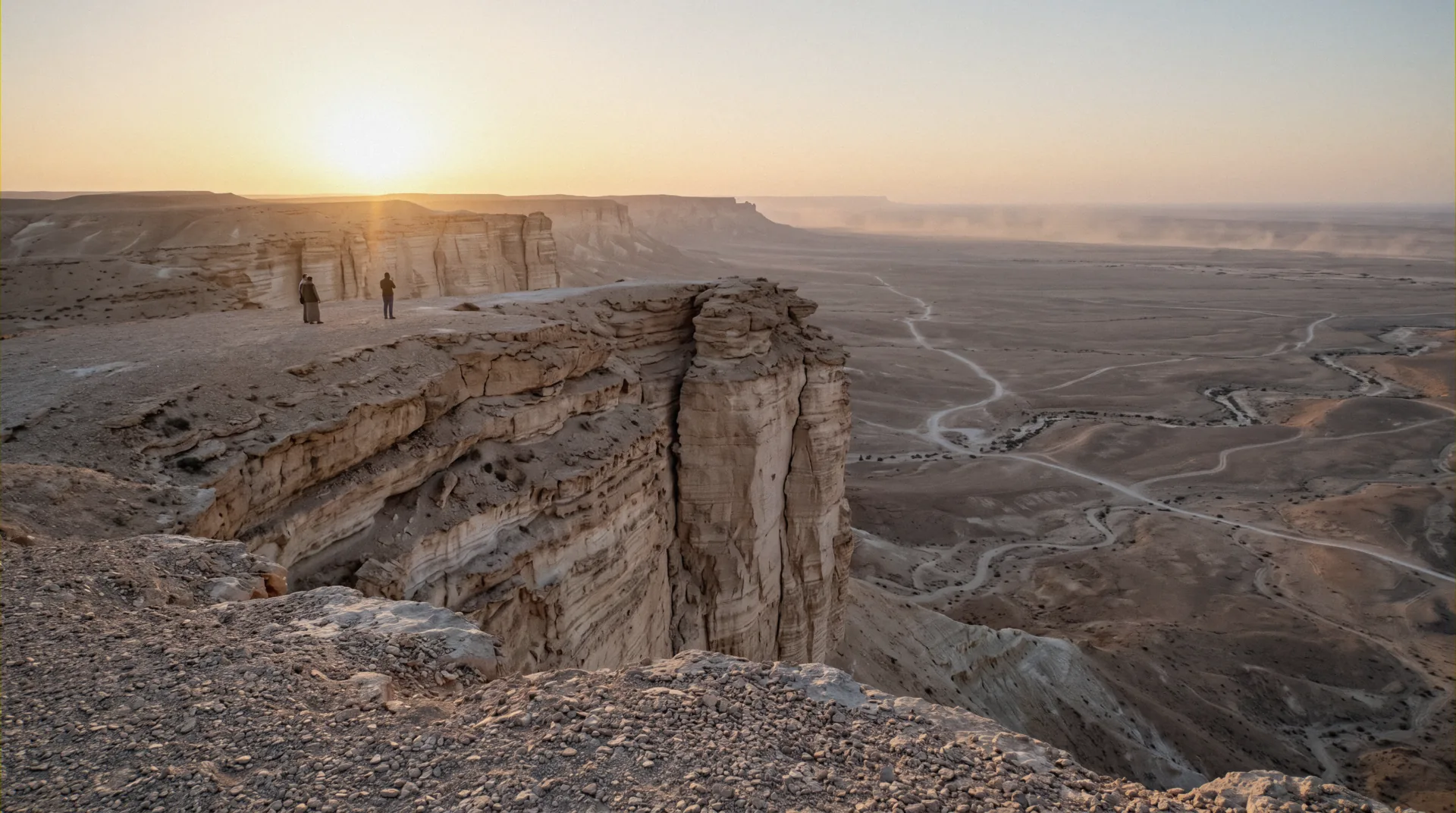
Should you go at sunrise or sunset. Sunset, in almost every case, and it comes down to which way the rock faces.
Why the Light Favours Evening
The escarpment faces out over the plain, so the low evening sun strikes the cliff face directly and the limestone turns orange in the last half hour before dark. At sunrise, the sun comes up behind the rim, so the face you've driven two hours to see sits in its own shadow while the plain below lights up instead. That's a genuinely different photograph, not a lesser one, but it explains why almost every listing sold from Riyadh runs at sunset rather than dawn.
Sunrise departures exist but are rare on the booking platforms and usually sold as private hires rather than shared seats, typically with a pickup around 03:30 to make the two-hour drive in time for first light. Midday is the option to avoid outright: flat overhead light for photographs, and from April onward, heat that turns the short walks between viewpoints from pleasant to genuinely risky with zero shade anywhere on site.
Weekdays vs the Saudi Weekend
Is the Edge of the World busy at weekends. Yes, consistently, and the pattern holds across every month of the year.
The Weekly Rhythm
Weekdays are markedly quieter than the Saudi weekend of Friday and Saturday, when Riyadh residents drive out to the escarpment in numbers on top of the regular tour traffic. Combine a Friday or Saturday with the cool-season peak of November through February and you get the busiest version of the trip: fuller vehicles, a queue for the best photo spots, and tour slots that book out earliest. A Tuesday or Wednesday departure in the same months gets you most of the same weather with noticeably more space on the rim.
What Each Season Feels Like on the Cliff
The table above gives the numbers; this is what they translate to once you're actually standing there.
Winter (November to February): Cold Air, Clear Views
This is the version most photographs are taken in. Days sit at 20 to 23°C (68 to 73°F), genuinely pleasant for standing around on rock, but nights fall to 8 to 10°C (46 to 50°F), cold enough that the warm layer covered on what to wear stops being optional once the sun goes. Demand peaks here too, so the small-group sunset trip and similar listings are worth booking a few days ahead rather than the morning of.
Spring (March to April): The Turning Point
March is still comfortable at 27°C (81°F); April jumps to 33°C (91°F) by day, hot enough that the walking is better left to the evening slot. Evenings stay pleasant later into April than the daytime temperature suggests, which is why sunset trips keep running through the month even as the midday heat climbs. This is also where the comfortable season effectively ends for anyone sensitive to heat.
Summer (May to August): The Window to Skip
Daytime highs run 39 to 44°C (102 to 111°F) across these four months, with no shade at any viewpoint on the site. Tours that still run in summer keep the outdoor portion as short as possible and lean hard on the sunset slot rather than any daytime departure. If summer is the only time you can travel, treat the visit as a brief, well-hydrated stop rather than a leisurely afternoon.
Autumn (September to October): Cooling Down, Slowly
September is still hot at 40°C (104°F) by day, barely different from August; the real relief arrives in October, down to 34°C (93°F) and dropping fast through the month. Crowds are thinner than the winter peak, and by late October the trip starts to feel like the comfortable season again rather than a compromise.
When Not to Go
The honest negative answer, stated plainly rather than softened.
June, July and August, at Any Time of Day
This is the hardest window to recommend. Afternoon highs regularly pass 40°C (104°F), July averages 44°C (111°F), and the site has no shade, no water and no shelter anywhere along the rim. It still works for one specific traveller: someone with a single, immovable summer date, no interest in swapping the trip for something else, and a plan to keep the outdoor portion to the sunset slot and under an hour.
Everyone else with any flexibility at all should move the date rather than push through the heat. If you're still weighing whether the trip suits your dates at all, is the Edge of the World worth it covers the wider trade-offs, and how to get there covers the drive itself.
Timing Questions
What is the best month to see the Edge of the World?
January and February give the most reliably comfortable combination of cool daytime air and clear skies, though November, December and March are close behind.
Is the Edge of the World bearable in summer?
Only briefly and only at sunset. June through August regularly passes 40°C (104°F) with zero shade, so summer visits work best kept short and scheduled for the coolest part of the day.
How far in advance should I book a cool-season trip?
Two to three days ahead for a weekend departure in November through February; the higher-rated listings fill first. Shoulder-season and summer dates can usually be booked closer to the day.
How cold does it actually get at night?
Down to around 8°C (46°F) in December and January, a sharp drop from a daytime high near 20°C (68°F). A warm layer matters on every sunset trip that stays out after dark, not just the ones that add stargazing.
Sunrise or sunset, which gives the better photos?
Sunset. The escarpment faces the plain, so evening light hits the cliff face directly while sunrise leaves it in shadow. Sunrise trips exist but run as rare private hires rather than shared bookings.
Which days of the week are quietest?
Tuesday through Thursday, consistently. Friday and Saturday, the Saudi weekend, bring noticeably heavier crowds in every month, especially stacked on top of the November-to-February peak.
Is April a reasonable compromise month?
Yes, with a caveat. Daytime highs reach 33°C (91°F), too warm for a midday walk, but evenings stay mild enough that a sunset departure still works comfortably and crowds are lighter than midwinter.
The month decides what the air feels like; the hour decides whether the trip is pleasant regardless of the month. Book October through March if the dates allow it, aim for a weekday sunset departure over a Friday or Saturday, and if a summer date is the only one on the table, keep the visit short and go straight for the sunset slot rather than the middle of the day.